How to grow Sunflowers in the UK
Grow one taller than a grown-up! Birds eat the seeds in autumn.
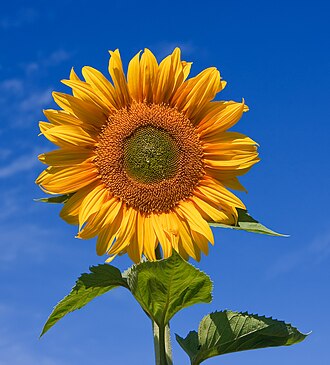
- DifficultyEasy peasy
- WhereBeds or Pots
- Sunfull sun
- Grows to200cm
- Spacing45cm
- Time to first pickabout 12 weeks
- Typeannual
When to sow, plant and harvest sunflowers
| Sow indoors | early April to mid May |
|---|---|
| Sow outdoors | mid May to mid June |
| Plant out | mid May to mid June |
| In flower | mid July to late September |
Dates are for central England. Sow about two weeks later in the north and Scotland, and up to two weeks earlier in the south and south west. Get the dates for your postcode.
Starting it indoors
- Fill a small pot or tray with seed compost
- Push the seeds in (2cm deep) - a couple per pot
- Water gently, then put them on a bright windowsill
- Keep the compost damp but not soggy - check it every day
- When they have 2 proper leaves, give each seedling its own pot
Sowing it outdoors
- Pull out any weeds and rake the top of your bed until it's crumbly, like cake crumbs
- Make a little line in the soil (2cm deep) with your finger or a stick
- Drop the seeds in, about 45cm apart each way
- Gently cover them with soil and pat it down
- Water with a watering can that has a sprinkler head
- Push in a label so you remember what's there
Planting it out
- Toughen them up ('hardening off'): put them outside in the day for a week, bring them in at night
- Dig a hole a bit bigger than the pot
- Tip the plant out gently, holding the leaves, not the stem
- Pop it in the hole, firm the soil around it, and water well
- Space the plants about 45cm apart each way
Top tips for growing sunflowers
- Have a sunflower race - measure them every week
- Push a cane in next to tall ones and tie them on, before the wind gets them.
Looking after sunflowers
- Week 3: Push a cane in next to each sunflower and tie it on loosely
- Week 4: Measure your sunflowers - who's winning?
Soil and feeding
Poor soil - really!. Nasturtiums flower best in poor soil. Feed them and you get all leaves and no flowers.
Pests and problems
- Slugs & snails: munch seedlings overnight, worst in wet weather
- Slugs love sunflower seedlings - grow them big in pots first
Harvesting and eating sunflowers
Enjoy the flowers. In autumn leave the heads for the birds, or cut them and dry them for seeds.
Companion planting
Grows well with
- Sweetcorn: tall friends - plant them on the north side together so they don't shade the rest
- Cucumbers: a sturdy pole for cucumbers to climb
- Runner beans: beans can climb the stems; bees visit both
- Butternut squash: bring in bees to pollinate
- Courgettes: bring in bees to pollinate
- Pumpkins: bring in bees to pollinate
- Broad beans: greenfly and blackfly often go for the sunflowers instead
Keep away from
- New potatoes: sunflowers are said to stunt potatoes - keep them apart
Saving your own sunflowers seed
Late summer and autumn, as the flowers fade.
- Stop deadheading a few flowers - let them fade on the plant
- When the seed heads are dry and brown (and the seeds rattle), snip them off on a dry day
- Shake the seeds into a paper bag
- Spread on a plate to dry for a week
Where to buy sunflowers seeds
Thompson & Morgan · Suttons · Amazon
These are affiliate links: we may earn a small commission if you buy, at no extra cost to you. Read more.
Sunflowers questions
When should I sow sunflowers in the UK?
In the UK, sow sunflowers indoors from early April to mid May or outdoors from mid May to mid June. These dates suit central England; sow about two weeks later in the north and Scotland and up to two weeks earlier in the mild south and south west.
When do I plant out sunflowers?
Plant sunflowers out from mid May to mid June, once the last frost has passed.
When can I enjoy sunflowers?
Sunflowers is ready from mid July to late September. Enjoy the flowers. In autumn leave the heads for the birds, or cut them and dry them for seeds.
How long do sunflowers take to grow?
Roughly 12 weeks from sowing or planting until the first harvest.
Are sunflowers easy to grow?
Sunflowers are rated 'easy peasy' for beginners, and can be grown in the ground or a raised bed or in pots and containers.
Plan your own garden: it tells you what to do and when, for your postcode.
Start growing - it's free