Home › Plants › Butternut squash
How to grow Butternut squash in the UK
Sweet, nutty squash that keeps for months. Big trailing plants - or train them up a strong frame.
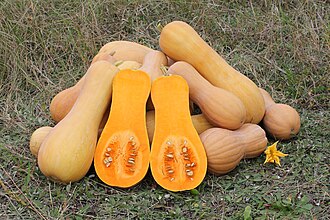
- DifficultyA bit more care
- WhereBeds
- Grows to50cm
- Spacing100cm
- Time to first pickabout 20 weeks
When to sow, plant and harvest butternut squash
| Sow indoors | mid April to mid May |
|---|---|
| Sow outdoors | early June to early June |
| Plant out | early June to mid June |
| Pick | mid September to mid October |
Dates are for central England. Sow about two weeks later in the north and Scotland, and up to two weeks earlier in the south and south west. Get the dates for your postcode.
Starting it indoors
- Fill a small pot or tray with seed compost
- Push the seeds in (2cm deep) - a couple per pot
- Water gently, then put them on a bright windowsill
- Keep the compost damp but not soggy - check it every day
- When they have 2 proper leaves, give each seedling its own pot
Sowing it outdoors
- Pull out any weeds and rake the top of your bed until it's crumbly, like cake crumbs
- Make a little line in the soil (2cm deep) with your finger or a stick
- Drop the seeds in, about 100cm apart in the row, with rows 150cm apart
- Gently cover them with soil and pat it down
- Water with a watering can that has a sprinkler head
- Push in a label so you remember what's there
Planting it out
- Toughen them up ('hardening off'): put them outside in the day for a week, bring them in at night
- Dig a hole a bit bigger than the pot
- Tip the plant out gently, holding the leaves, not the stem
- Pop it in the hole, firm the soil around it, and water well
- Space the plants about 100cm apart in the row, with rows 150cm apart
Top tips for growing butternut squash
- Plant on a mound of compost - squash are very hungry.
- Short of space? Grow them up a sturdy arch or fence and support each squash with a net sling.
Looking after butternut squash
- Week 2: Water well twice a week at the bottom of the plant
- Week 8: Once 3-4 squash have formed, pinch off the ends of the long stems so the plant fills those out
- Week 10: Put a tile or piece of wood under each squash so it doesn't rot
Soil and feeding
Rich, moist soil packed with goodness. These are hungry plants. Dig a hole (or make a mound) and fill it with manure or compost before planting, then feed every week or two once the fruit starts.
Pests and problems
- Slugs & snails: munch seedlings overnight, worst in wet weather
- Go on a slug hunt at dusk with a torch and move them far away
- Sink a jam jar into the soil with a little beer in it - slugs fall in
- Cut the bottom off a plastic bottle and pop it over each young plant, like a mini greenhouse
Harvesting and eating butternut squash
When the skin is hard (your nail can't dent it) and the stem goes woody, cut with a bit of stalk. Before the first frost!
How to eat them: Halve, scoop out the seeds, roast with oil until soft. Or make soup.
Storing butternut squash
Keeps 3-6 months once dried.
- Cut with a bit of stalk, and carry it by the squash, not the stalk
- Dry it in the sun or a warm room for 1-2 weeks so the skin goes hard
- Keep somewhere cool and dry indoors
Peel, cut into chunks and freeze raw, or roast first. Great for soup.
Good varieties of butternut squash
- Butternut Waltham: Sweet orange flesh - keeps for months.
- Crown Prince: Blue-grey skin and the best flavour - keeps all winter.
- Uchiki Kuri: Small orange 'onion squash' - ripens even in cooler summers.
Companion planting
Grows well with
- Sweetcorn: 'three sisters': big leaves shade out weeds under the corn
- Nasturtiums: nasturtiums bring in bees to pollinate squash flowers
- Runner beans: beans feed the soil for the hungry squash
- Borage: bees for pollinating the flowers
- Phacelia: brings bees to pollinate
- Sunflowers: bring in bees to pollinate
Saving your own butternut squash seed
From a ripe fruit in autumn.
- Bees mix pollen between courgettes, squash and pumpkins, so saved seeds can grow odd-looking fruit - that's half the fun!
- Scoop the seeds from a fully ripe fruit (courgettes: leave one to grow into a huge marrow first)
- Wash them, then dry on a plate for 2 weeks
- Or roast them with a little salt - a tasty snack
- Seeds from 'F1' varieties (it says on the packet) don't grow the same - save from ordinary ones.
Things to build for butternut squash
Where to buy butternut squash seeds
Thompson & Morgan · Suttons · Amazon
These are affiliate links: we may earn a small commission if you buy, at no extra cost to you. Read more.
Butternut squash questions
When should I sow butternut squash in the UK?
In the UK, sow butternut squash indoors from mid April to mid May or outdoors from early June to early June. These dates suit central England; sow about two weeks later in the north and Scotland and up to two weeks earlier in the mild south and south west.
When do I plant out butternut squash?
Plant butternut squash out from early June to mid June, once the last frost has passed.
When can I pick butternut squash?
Butternut squash is ready from mid September to mid October. When the skin is hard (your nail can't dent it) and the stem goes woody, cut with a bit of stalk. Before the first frost!
How long do butternut squash take to grow?
Roughly 20 weeks from sowing or planting until the first harvest.
Are butternut squash easy to grow?
Butternut squash are rated 'a bit more care' for beginners, and can be grown in the ground or a raised bed.
Plan your own garden: it tells you what to do and when, for your postcode.
Start growing - it's free